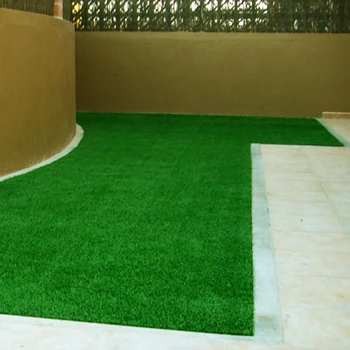
Synthetic Grass Is Not Just for Sports Fans

Anyone who’s been in an expert sports field or perhaps a miniature greens knows what synthetic grass is. The most used brand was first designed in the early 1960s with a person called David Chaney along with a group of researchers seeking to solve a stadium-sized dilemma. The first of those sheets of abs were officially installed in the Astrodome in Houston, Texas in 1966. All-natural grass that was planted within this indoor stadium in 1965 had reached such a dismal condition halfway with the year that it actually had to be painted green to check more like it had been alive. Thus, fake vegetation was brought in, and its particular popularity quickly took root. In early 1970’s, artificial turf was implanted in many baseball and football stadiums, both indoor and out, all across america and Canada.


But playing fields are not the only place you will discover man-made turf these days. Cropping up all across the country are home for residential homes. Many individuals declare that you can find environmental benefits of having these lawns installed. One study in Los Angeles indicated that personal lawn mowers were emitting roughly 11 times the amount of pollution as cars, and leaf blowers were about as bad. Another environmental factor will be the amount of water required to maintain lawns, particularly in areas characterized by dry weather and areas becoming impacted by drought. It is recommended that synthetic lawns are watered periodically to make sure they’re clean (some also claim that watering helps them to sound less like plastic when walked on), but the amount of water required is quite a bit less than such a living lawn demands. Another environmentally conscious argument because of these lawns is because they do not require any fertilizer, therefore reducing fertilizer runoff into local water supplies.

Another reason for your proliferation of man-made yard coverage is that it simply looks beautiful as well as almost no maintenance. It really is almost impossible to share with, standing at a good close distance, that synthetic grass isn’t the real live thing. Technology has come a long way since the beginning, and nowadays there is a wide array of lengths and styles offered for carpeting residential lawns. Imagine: no lawnmower noise, no huge water bills, no hauling fertilizer. This is exactly what draws people in.

Going the road of artificial turf, however, comes with its costs and will range pretty full of price. Additionally, installation is a big project and often a noisy one, as sand has to be compressed within the lawn prior to the sheets are set to stop any growth coming through. Yet the investment is a reasonably solid one: maintenance fees fail, as well as your new lawn will pay for itself in a matter of years.

Synthetic grass might be later on for additional and much more homeowners, and also unless you feel it is inside the cards for you personally, perhaps consider making friends using a homeowner using these lawns: it just may be the best place to get a pickup baseball game in the neighborhood.

Introduce Yourself (Example Post)

This is an example post, originally published as part of Blogging University. Enroll in one of our ten programs, and start your blog right.

You’re going to publish a post today. Don’t worry about how your blog looks. Don’t worry if you haven’t given it a name yet, or you’re feeling overwhelmed. Just click the “New Post” button, and tell us why you’re here.

Why do this?

  • Because it gives new readers context. What are you about? Why should they read your blog?
  • Because it will help you focus you own ideas about your blog and what you’d like to do with it.

The post can be short or long, a personal intro to your life or a bloggy mission statement, a manifesto for the future or a simple outline of your the types of things you hope to publish.

To help you get started, here are a few questions:

  • Why are you blogging publicly, rather than keeping a personal journal?
  • What topics do you think you’ll write about?
  • Who would you love to connect with via your blog?
  • If you blog successfully throughout the next year, what would you hope to have accomplished?

You’re not locked into any of this; one of the wonderful things about blogs is how they constantly evolve as we learn, grow, and interact with one another — but it’s good to know where and why you started, and articulating your goals may just give you a few other post ideas.

Can’t think how to get started? Just write the first thing that pops into your head. Anne Lamott, author of a book on writing we love, says that you need to give yourself permission to write a “crappy first draft”. Anne makes a great point — just start writing, and worry about editing it later.

When you’re ready to publish, give your post three to five tags that describe your blog’s focus — writing, photography, fiction, parenting, food, cars, movies, sports, whatever. These tags will help others who care about your topics find you in the Reader. Make sure one of the tags is “zerotohero,” so other new bloggers can find you, too.

Create your own website, free on WordPress.com.Create your own website.
Start free